Outdoors · spring to fall
Our fields
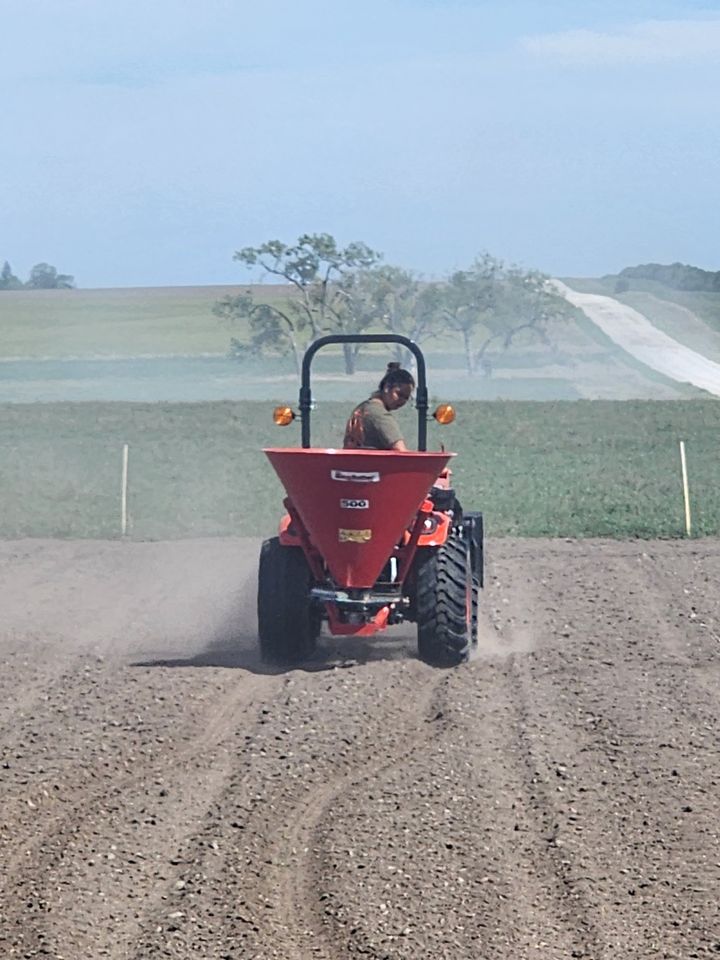
On our farm just south of Chadron, our outdoor fields, including our one-acre regenerative pilot plot, grow vegetables, fruit and herbs in regenerative rows through the growing season.


We grow vegetables, fruit and herbs for our local community, and we grow them by restoring the ground they come from.
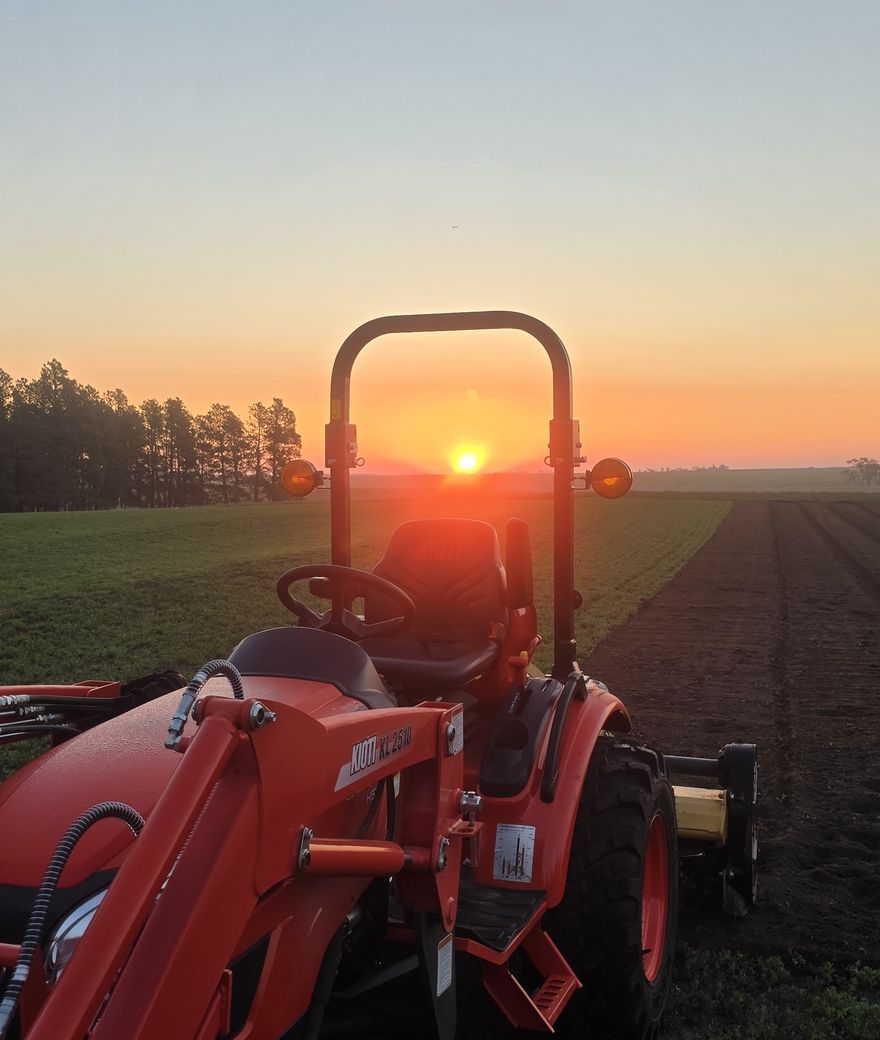
MUG is a produce farm with one heartfelt purpose: to bring fresh, high-quality food directly to the people and institutions of our community.
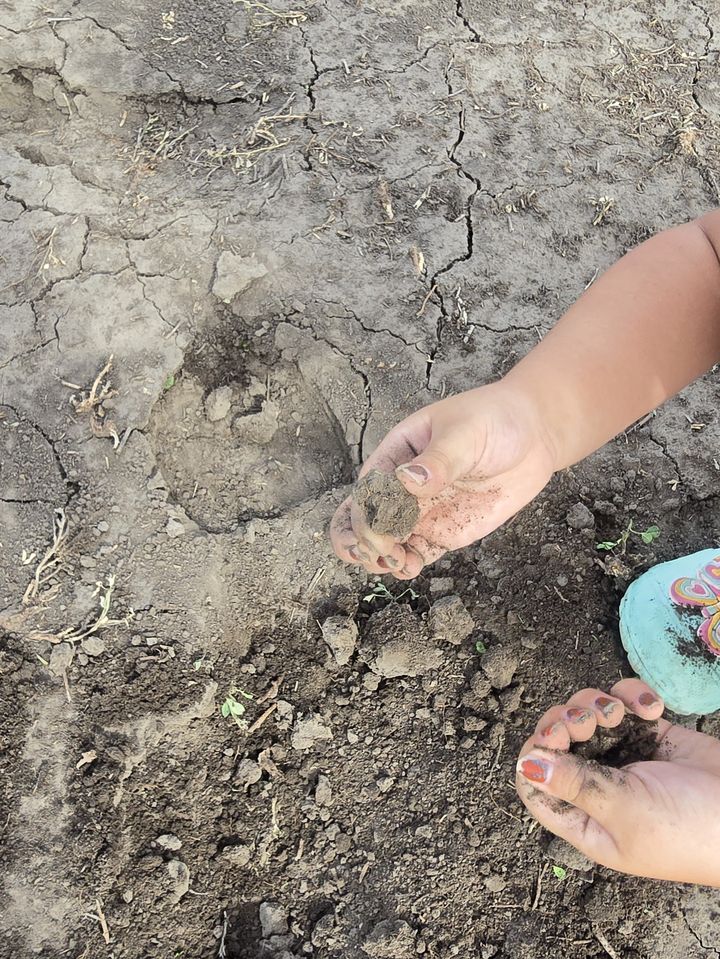
Everything we grow starts with regenerative agriculture, a whole-systems approach that focuses on enhancing and restoring soil health, biodiversity, and ecosystem vitality.
It moves beyond simple sustainability. The goal is not only to avoid harm to the land, but to leave it richer, more diverse and more resilient every season.
MUG is home to a regenerative pilot plot, where we put whole-farm regenerative practices to work and measure how they build soil health over time.
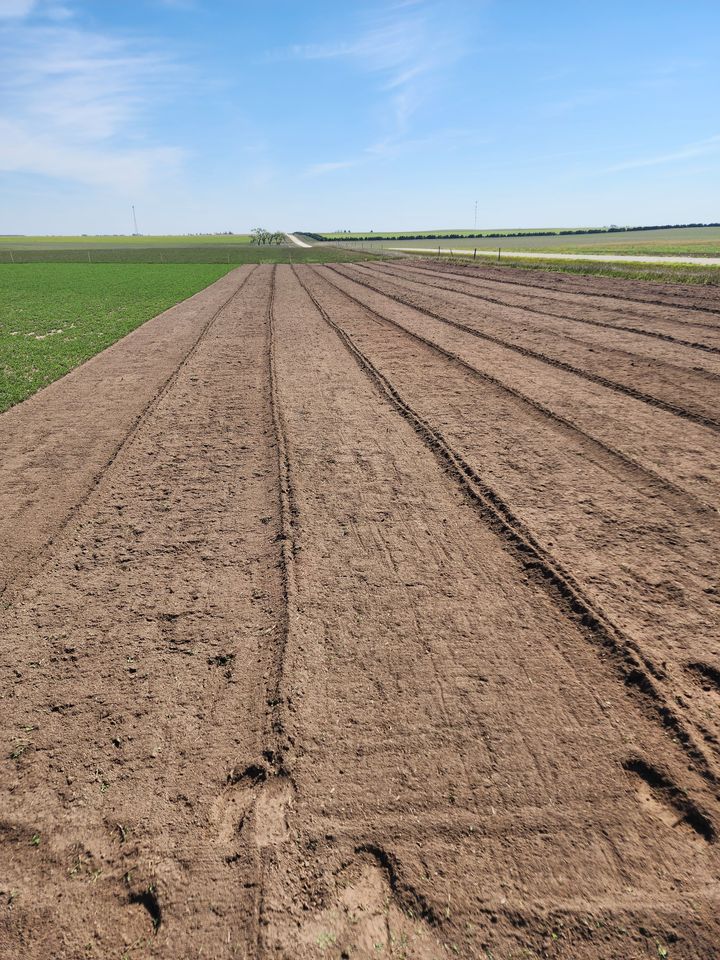
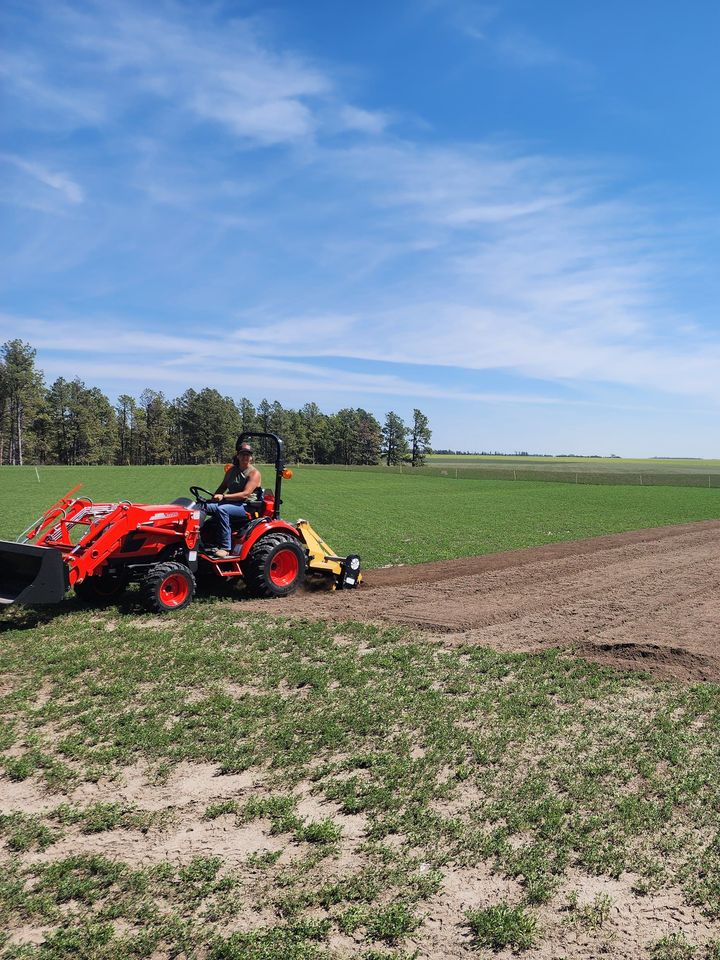
We're turning one acre of our farm into a showcase of regenerative produce growing. We're expanding one season at a time, with cover crops loosening and feeding the soil ahead of each year's new rows. We use minimal tillage in the first year to establish the beds, then move to no-till from the second year on.
Chadron State College works with us on soil testing, so every step is measured and every lesson is shared.
Proof of concept with minimal tillage, testing plant-fiber mulch paths and a cardboard weed barrier.
No-till begins. Full 100-foot rows, with the rest of the field in cover crop.
Halfway to full production.
Expanding into soil built by earlier cover crops.
The full acre in production.
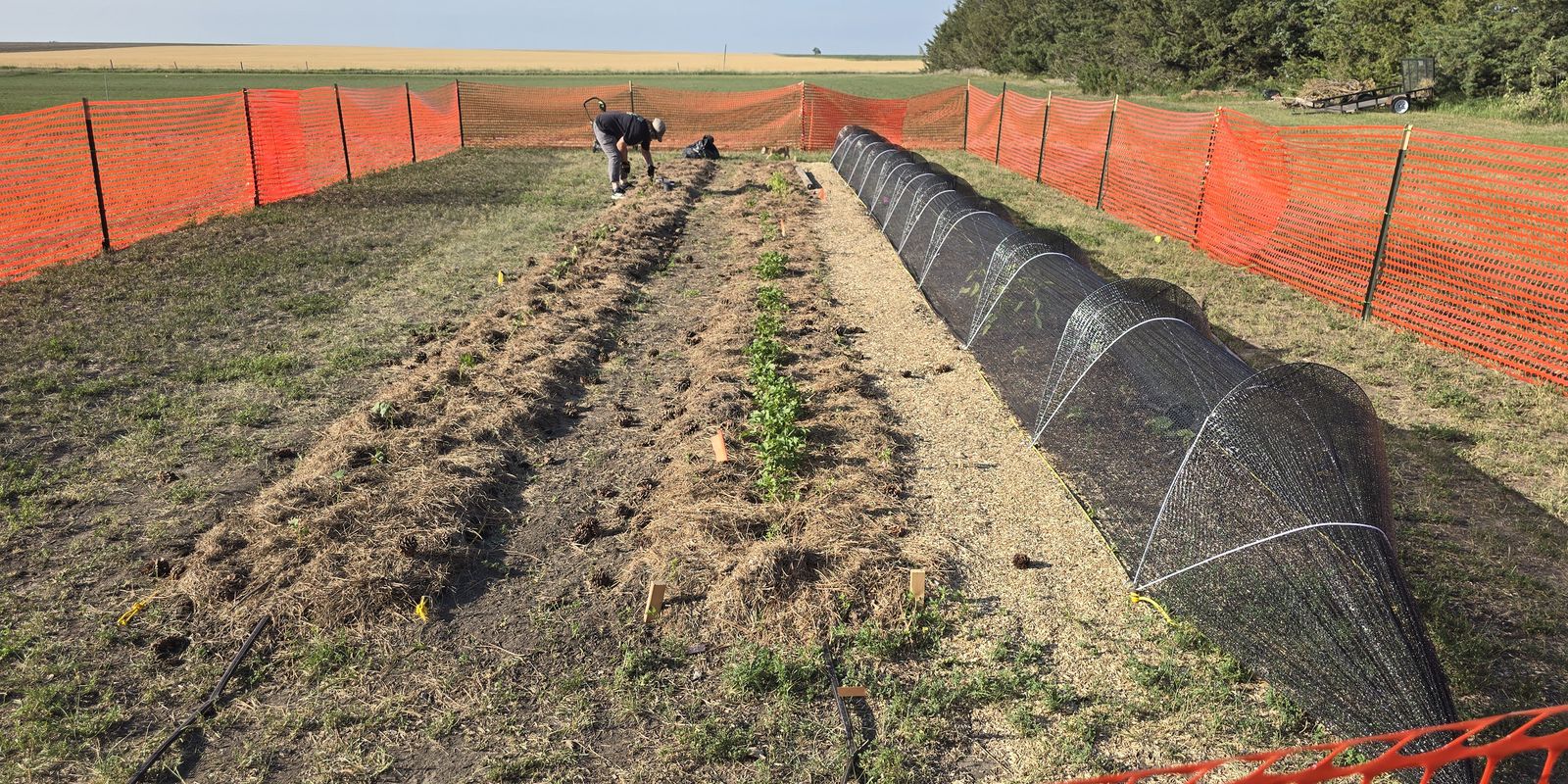
Nebraska winters are long, but fresh food shouldn't stop when the fields go quiet. We grow in two places: our farm just south of Chadron, with open fields, high tunnels and indoor growing space, and our urban indoor grow in town. Together they let us grow produce all year round.

On our farm just south of Chadron, our outdoor fields, including our one-acre regenerative pilot plot, grow vegetables, fruit and herbs in regenerative rows through the growing season.
A 50-foot and a 100-foot high tunnel on the farm shelter crops from wind and frost, starting earlier in spring and harvesting later into fall and winter. We also run indoor growing on the farm itself.
At our location in the town of Chadron, we grow microgreens and other leafy greens every month of the year, even in the middle of winter.
We use minimal tillage in our first year to set the beds, then go fully no-till, keeping the soil's structure, fungal networks and stored carbon intact.
Living plants hold the ground between harvests, feeding soil life, holding moisture and preventing erosion.
Changing what grows where, season to season, breaks pest cycles and builds nutrients back into the field.
MUG is becoming a center for applied research and hands-on training, testing what works on our land so more farmers can grow here.
Applied research into the crop varieties best suited to local growing conditions.
Techniques that make every drop of water count on the High Plains.
Building effective, localized routes from our fields to the tables we serve.
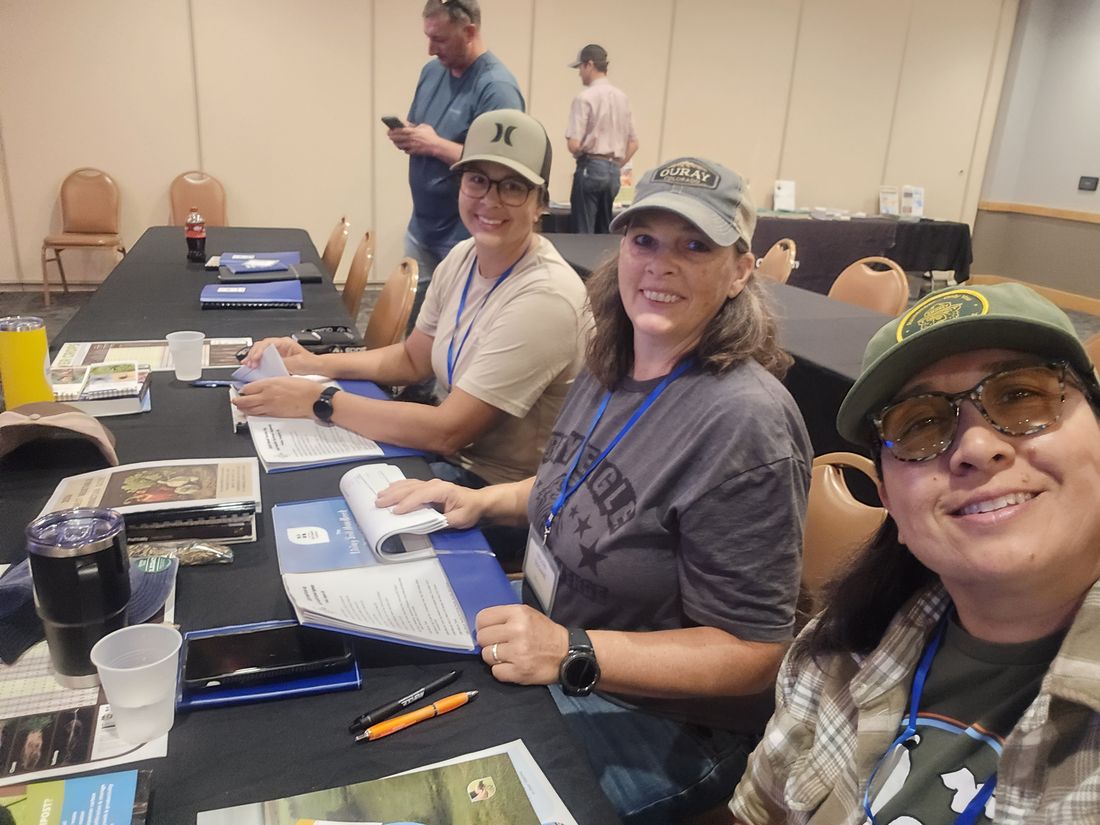
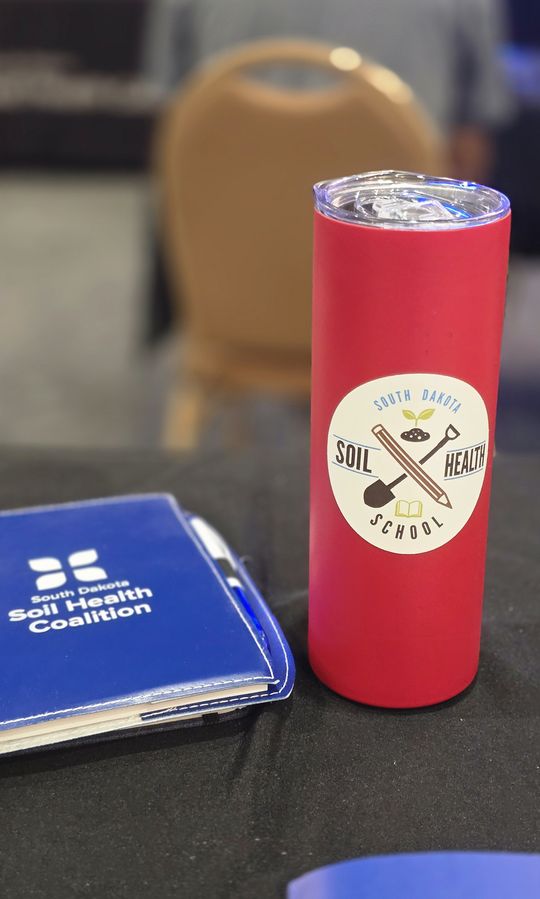
Healthy soil is at the heart of everything we do, and we never stop learning about it. Our team attends soil health trainings, like the South Dakota Soil Health School, and brings what we learn home to the farm.
Biobased strategies turn plants, crop residue and forest material into useful products, keeping value, and carbon, close to home.
Research with university partners into plant-based paints and pigments made from crops grown in Nebraska and South Dakota.
A forest health plan for our wooded acreage, turning beetle-killed timber into mulch and animal bedding.
Plant-fiber mulches from crop stalks and residue that protect paths and beds, then break down to feed the ground.
Wholesale DistributionOur wholesale arm supplies restaurants, food trucks, event buyers, schools, institutions and local shops with everything from labels to produce and microgreen containers, and supplies farms and feed stores with 100% hemp animal bedding. We are locally owned and woman-owned, right here in Chadron, Nebraska.
We're building a farm that everyone can reach, explore and grow in. Accessibility isn't an add-on here. It's part of the design from the very first row.
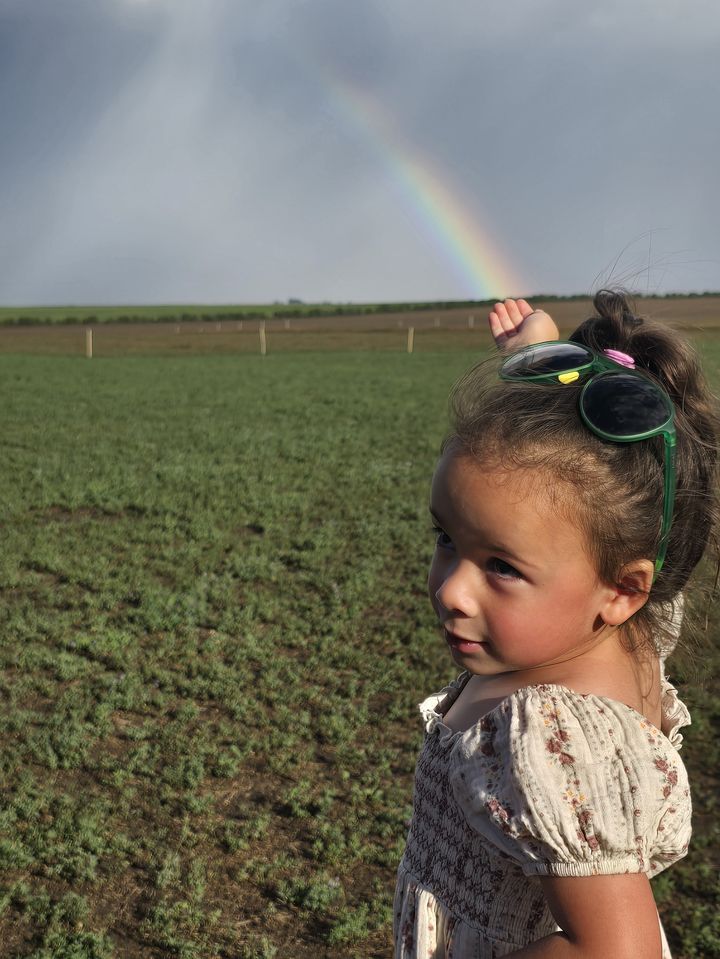
Wide, firm, level paths designed into the field layout so wheelchairs, walkers and strollers can move through the farm.
Spaces across the farm planned so every visitor, learner and grower can take part up close.
From preschoolers to elders, a place where the whole community can learn where good food comes from.
MUG is a proud recipient of a Nebraska Rural Health Transformation Program (RHTP) grant, part of the state's work to make rural Nebraska healthier through food. The grant is helping us build a packing and washing station, a refrigeration system and a cold-storage delivery vehicle, so our produce arrives fresh and safe.
We're working with multiple Head Start programs, schools and community institutions across the Nebraska Panhandle to bring just-picked vegetables, fruit and herbs to young children and their families.
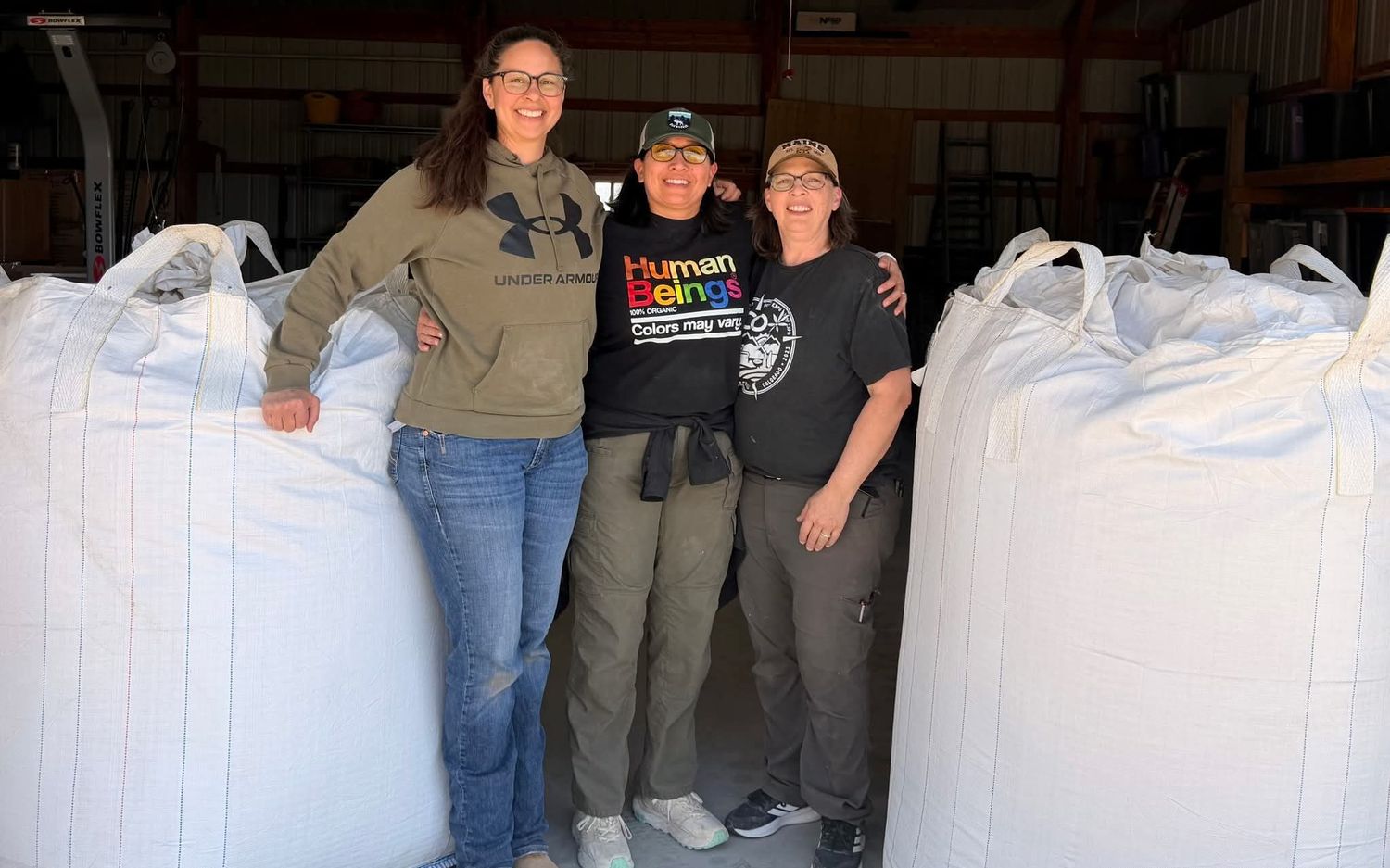

Nickie brings decades of experience in executive leadership, operations, technology, healthcare administration, business development, and project implementation. A former hospital COO/CIO, Nickie has spent much of her career working at the intersection of people, systems, strategy, and execution, helping organizations turn complex challenges into practical, achievable solutions.
Her experience spans strategic and operational planning, technology implementation, regulatory compliance, budgeting, grant development and management, program design, and large-scale project coordination. She is particularly skilled at taking an idea from its earliest stages, lining up the resources and partnerships to move it forward, and building the structure to make it work.
Nickie’s work has crossed healthcare, small business, agriculture, nonprofit and community-based initiatives, serving native and non-native individuals and organizations on and off reservations, and giving her a unique understanding of the challenges facing organizations operating with limited resources, particularly in rural and underserved communities. At MUG, she is developing local food-system infrastructure and controlled-environment and regenerative agriculture enterprises in western Nebraska and the surrounding region.
She also co-owns MUG’s sister company, N & D Kairos, LLC, where she brings those experiences together to help organizations recognize opportunity, develop strong strategies, secure resources, and move from planning to implementation.
Dionne is a business consultant, executive and social entrepreneur with two decades of experience building the operational backbone of mission-driven organizations across tribal, state, and private sectors: HR systems, vendor and permitting processes, SOPs, budgets, and contract reporting. Earlier, she held executive roles across multiple treatment settings, built and licensed a treatment and education program from the ground up as Program Director, and spent five years as a licensed real estate agent.
Through MUG's sister company, N & D Kairos, LLC, she manages project portfolios, tying diversified agricultural and food enterprises, including bison operations, into one coordinated economic development strategy. She leads site development from the ground up, building site budgets and coordinating contractors and vendors for projects ranging from agricultural and food facilities on tribal lands to a laundromat, food hub, and farm stand in rural South Dakota.
Since 2013 she has also brought experience in cultivation strategy, SOP and compliance systems, licensure, grant writing, and biobased building materials such as hempcrete. At MUG, she is the primary liaison with academic and research partners, from entry-level students to PhD researchers.
She cares most about serving underserved communities, particularly Native Nations, by helping build revenue-generating enterprises in agriculture, biobased materials, and related sectors that create real economic opportunity and lasting infrastructure. Bison restoration runs through nearly every project she takes on.
Sarah bridges on-farm production with logistics and delivery, keeping the work moving from planting through harvest, inventory and distribution. Her work across Wyoming, Colorado, Nebraska and South Dakota has put her alongside native and non-native individuals and organizations, both on and off reservations. She is detail-oriented, stays calm under pressure, solves problems on the spot and works just as well on her own as with a team.
At MUG she develops crop plans, planting schedules and maintenance routines, helps with soil preparation, field layout and workflow organization, and advises small farm and urban agriculture growers on startup planning and daily operations. Since 2020 she has also owned and run Kenai Farm, handling everything from field prep through cultivation, including crop health, irrigation, and land and equipment maintenance.
Sarah comes from a background in larger-scale agriculture, and she now brings those transferable skills, from starting seed and field preparation to irrigation and equipment, to MUG, her own farm and the farmers and cultivators we work with, helping each one move toward regenerative practices that build healthier soil. Off the farm, she brings more than a decade of regulated delivery, logistics and documentation-driven work: managing high-volume daily workloads under strict safety standards, coordinating routes, pickups and returns, keeping accurate compliance records, and teaching people to use equipment safely. She has also conducted testing and verified records for a state agency and performed final quality inspection on manufactured products.
With shop skills in welding, grinding, powder coating and plasma cutting, she can repair and fabricate as easily as she can plant, and her eye for safety, accuracy and efficiency carries into every part of MUG’s operation.
Originally from Gordon, Nebraska, Dennis has roots in the same Panhandle communities MUG serves. As Business Operations Coordinator, he keeps the business side of MUG running smoothly, connecting the day-to-day needs of the farm, the high tunnels and our urban indoor grow with the people and suppliers who keep them moving.
He manages MUG’s vendor relationships and handles purchasing and ordering, from seed, soil amendments and growing media to packaging and equipment. He compares pricing, tracks orders and deliveries, and keeps purchases on schedule and on budget. Just as important, he builds strong, lasting relationships with our suppliers, the kind of trust that keeps quality high and helps MUG plan ahead for every season.
Dennis is also an artist. His creative journey began with abstract painting, where he drew inspiration from the bold expression and distinctive visual language of artists such as Jackson Pollock, Piet Mondrian and Franz Kline: the energy of a gesture, the balance of line and color, the power of contrast. Today he is expanding his artistic horizons through the digital manipulation of his own original photographs, exploring new ways to transform image, color and composition into expressive visual experiences.
As a lover of travel, Dennis draws inspiration from his own experiences across Asia, Europe, and North America. Dennis also enjoys exploring aspects of anthropology and sociology with the fascinating stories of people and their life experiences.
MUG is a woman-owned, beginning farmer enterprise, combining executive leadership, hands-on growing experience and a deep commitment to regenerative agriculture and community health.
Good food systems are built by many hands. These are the groups, schools and organizations we're proud to grow alongside.
We work with the Rangeland Management program at Chadron State College, whose faculty and students bring range science and soil testing to our ground, so every step we take is measured.
Our farm is open to the program as a living classroom. A rangeland management student is completing her final capstone project across the whole property, working alongside our team to develop a multi-year plan for the land.
Visit the program
N & D Kairos, LLC is the business development and strategy firm co-owned by Nickie and Dionne. It works with native and non-native individuals and organizations, including tribal nations, farms and cooperatives, to turn big plans into working enterprises. That means shaping the strategy, managing the project portfolio, and preparing for grants or investment, then supporting the management and reporting once funding comes through.
MUG is their proving ground. Methods are tested on our own farm before they're recommended to anyone else, so the advice comes from seasons we've actually farmed.
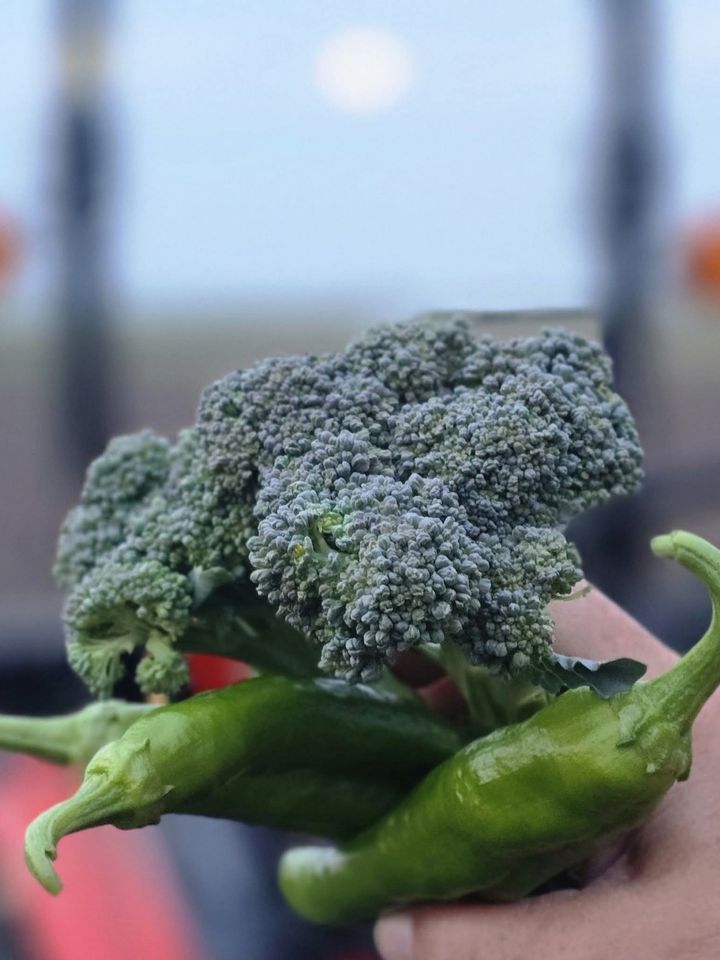
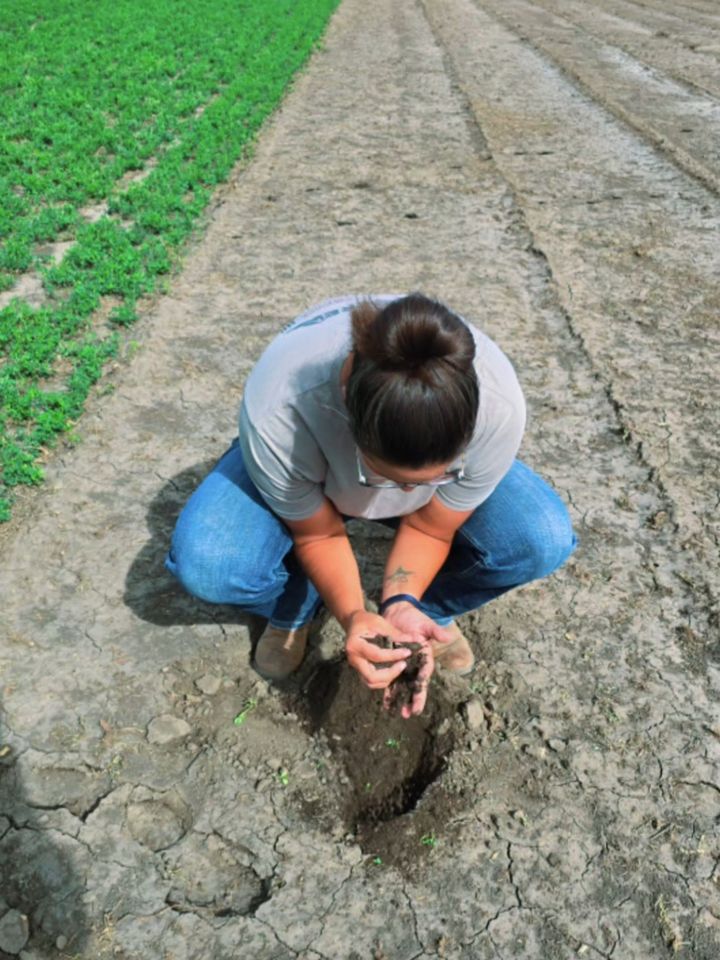


Questions about our produce, our regenerative pilot plot, our biobased work, or our research and training? Send us a note, or follow along as the season unfolds.